


The key to a successful event is to focus on fostering engagement and creating engaging experiences, which requires the right event engagement software. The following list will give you an overview of the most innovative tools and platforms out there to activate your audience.
What is an event engagement software?
Your event engagement software streamlines the complex audience activation process and it should be treated as the backbone of your event. It should be able to ensure every detail, from breaking the ice and prompts for networking to live streaming and interactivity, is managed efficiently and effectively. So choosing the right one might prove a tricky task.
Consider the type of events you host, your audience’s preferences, and your operational requirements. Don’t forget about the latest trends in event technology, like AI features, event apps, social wall integration, etc.
Whether you opt for an all-in-one solution or a virtual-first platform, choosing software that aligns with your event goals and enhances the attendee experience is crucial.
⭐ Related: Top Event Management Software 2026
How to choose the right event engagement software?
Choosing event technology solutions usually comes down to a few practical trade-offs. The right answer depends on the size and format of the event. Here are the aspects to consider.
Ease of use: This is true for the event team that’s setting things up and for the people who are there. A tool that needs weeks of training defeats the purpose, especially for one-off or annual events where staff won’t retain deep expertise between uses.
Integration and compatibility with your current stack. Registration platforms, CRM, marketing automation, streaming or AV setup is often the biggest hidden cost. A solution that looks great on its own but requires manual data exports or custom development to connect elsewhere can quietly use up the budget.
Data privacy and compliance, especially when collecting information about attendees, photos, or social content. You should check where the data is stored, how consent is handled, and if the vendor’s data processing terms align with GDPR (or your local laws) if you’re in Europe or serving European attendees.
It’s very important to moderate and control content for any site that has live, user-generated content. This includes social walls, live Q&A, and polls. If you don’t moderate these public displays, they can quickly go wrong. Look for real-time moderation tools, profanity filters, and the ability to approve content before it’s shown.
Analytics and reporting determine whether you can prove the return on investment afterwards. This means looking at engagement rates, reach, lead capture, and sentiment. You can’t just run the tool and hope it helped.
10 best event engagement software to activate your audience
All-in-one event engagement software provides a comprehensive suite of tools to streamline every aspect of audience interaction. These platforms offer different types of solution, from registration and ticketing to attendee engagement and post-event analytics, there’s one for every taste and context.
1. Walls.io
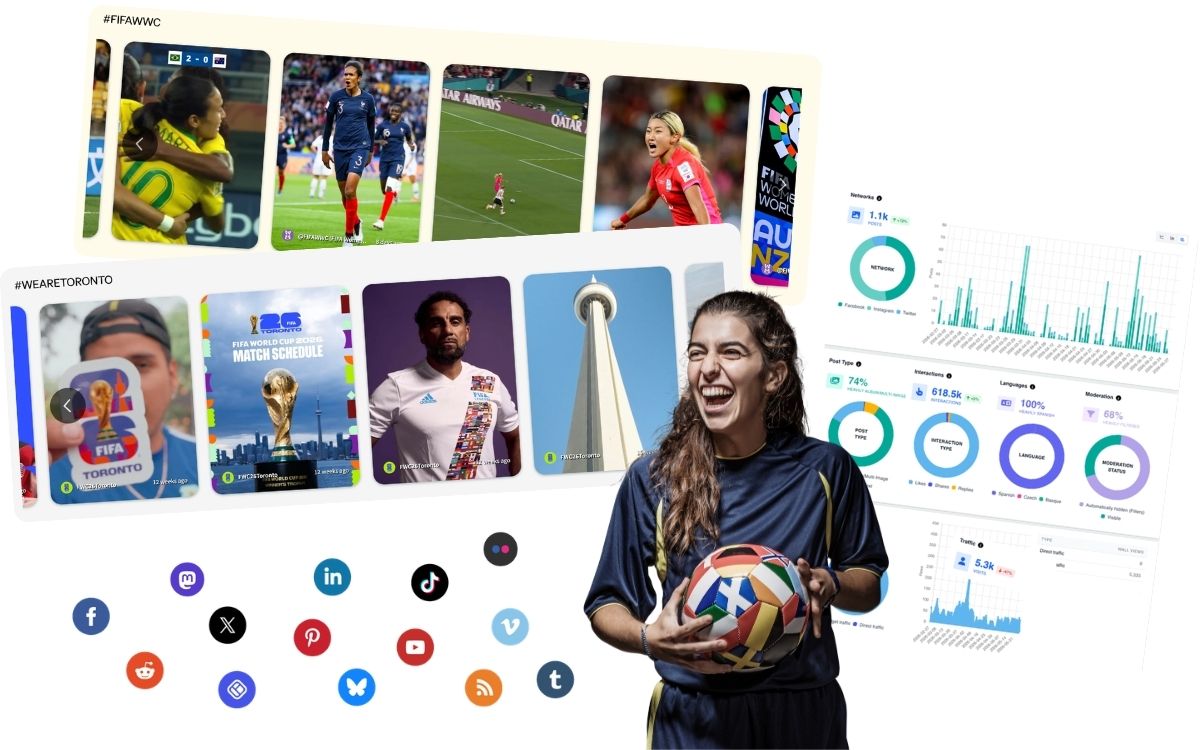
Walls.io is an engagement tool that allows you to collect content posted by attendees and speakers using your event’s hashtag. You can display the content on screens at the venue or embed it on your website or virtual event platform. Seeing attendees’ messages pop up on the screen in real-time keeps them engaged and motivates them to keep posting.
If your event is private, a Walls.io social wall will help you connect with attendees by letting them upload content directly to the wall with the Direct Posts feature. The event wall acts as a social hub and encourages interaction between attendees, speakers, and sponsors.
👉 Ready to make your audience part of the story?
Start building interactive experiences with Walls.io today
⭐ Related: What is a social media wall?
2. 6Connex
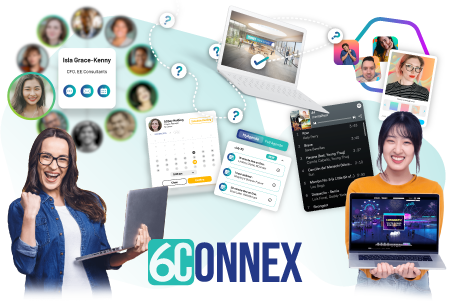
6Connex is the leading provider of in-person, hybrid, and virtual events, driving in-depth content engagement. Their offerings include an event management platform, video and webcasting tools, in-person event apps, reporting and analytics, and open universe integrations enhanced by AI Matchmaking and AI Content Suggestion features.
3. The Sketch Effect
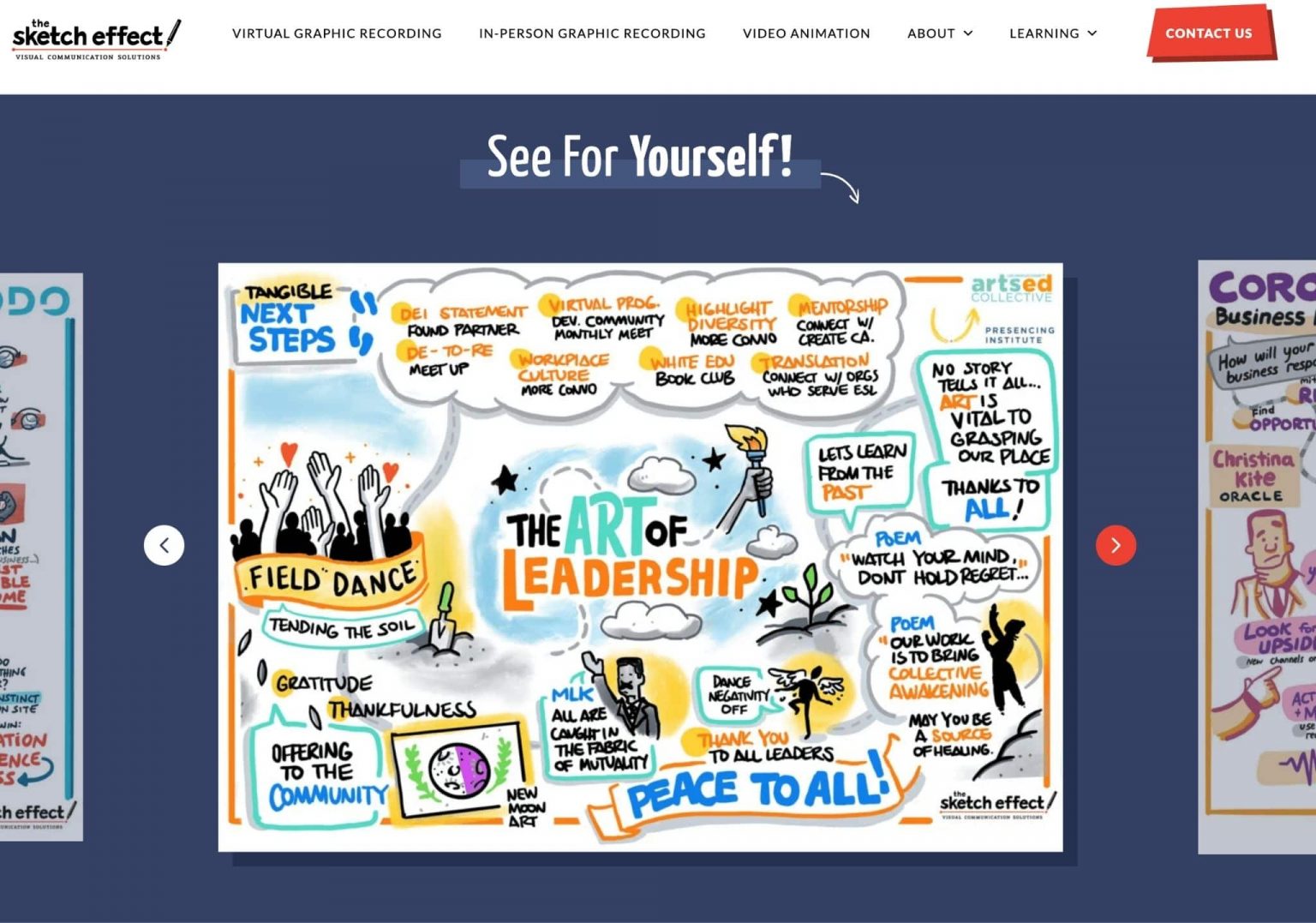
The Sketch Effect helps you get the attention of your attendees with Virtual Graphic Recording. This visual event engagement tool is highly effective. Not only will viewers appreciate the art in front of them, but they will understand the topic even better. Check out their website to learn about different use cases and examples.
4. Cvent
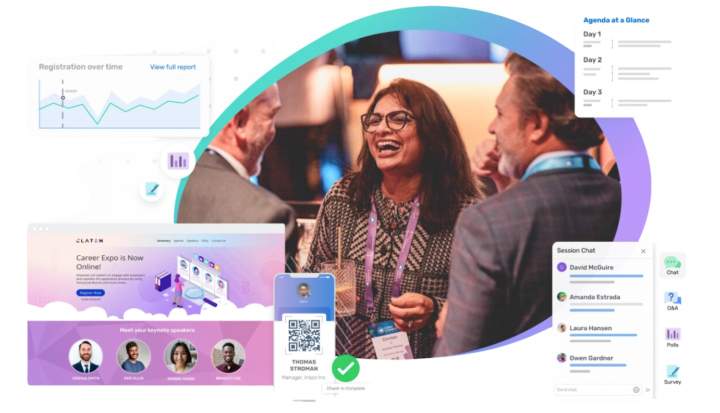
Cvent is a leading meetings, events, and hospitality technology provider. The comprehensive Cvent event marketing and management platform offers software solutions to event organizers and marketers for online event registration, venue selection, event marketing and management, virtual and onsite solutions, and attendee engagement. Cvent’s suite of products automate and simplify the event management lifecycle and maximize the impact of in-person, virtual, and hybrid events.
5. Digital photo booth
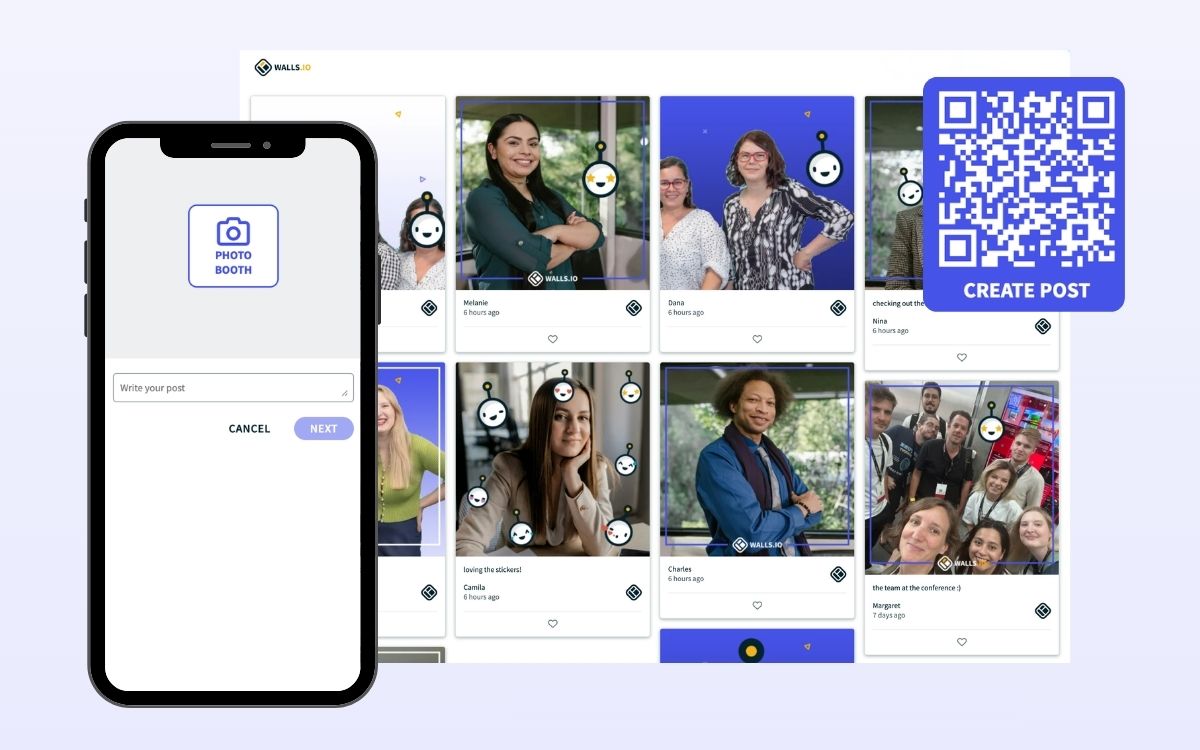
Social walls and digital photo booths are two of the most significant engagement drivers for virtual events because people enjoy creating and sharing content. So why not combine both tools to get an ultimate interactive solution?
Creating custom photo content and displaying it on a social wall fosters community and helps speakers and sponsors connect with the audience. Moreover, by showing selfies from attendees, you help your speakers fight the feeling that they’re talking in a vacuum. As the saying goes, a picture is worth a thousand words.
The digital digital photo booth add-on can easily be integrated with your social wall! We’d be happy to show you how it works. Just book a demo here.
Collect event content without moving a finger
6. Gevme
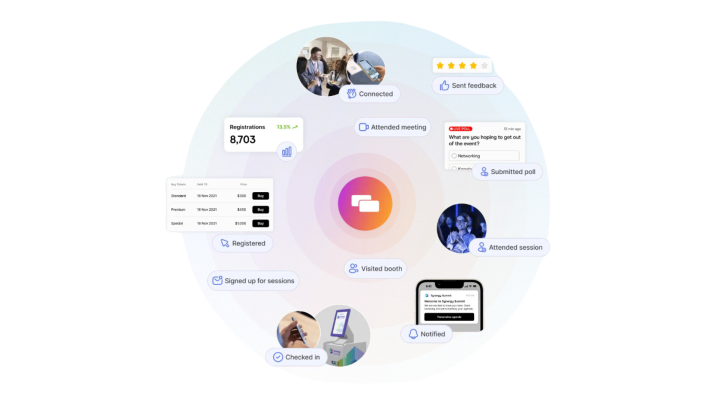
Gevme is an omnichannel event platform that enables organizations to grow, engage, and monetize their audience across different channels. The all-in-one platform helps organizations manage event registration, websites, sponsors, AI matchmaking and engagement, and event content.
7. Slido
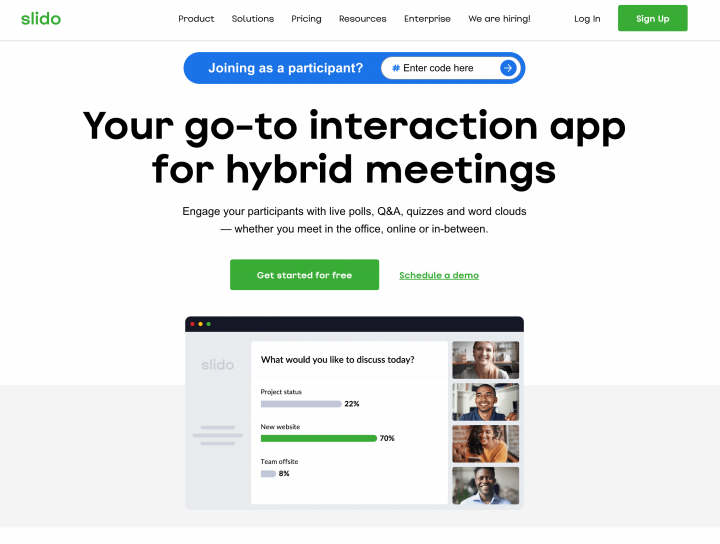
Slido is an audience interaction platform that helps you engage your online attendees with live polls, Q&A, and quizzes as they’re watching your virtual event or webinar. Crowdsource questions from participants and let them vote for their favorites. Then, take questions as you go or address the most popular ones in an engaging Q&A session.
You can embed Slido into a website or integrate live video into a Slido event. No matter what you choose, Slido will certainly boost engagement at your event.
8. InEvent
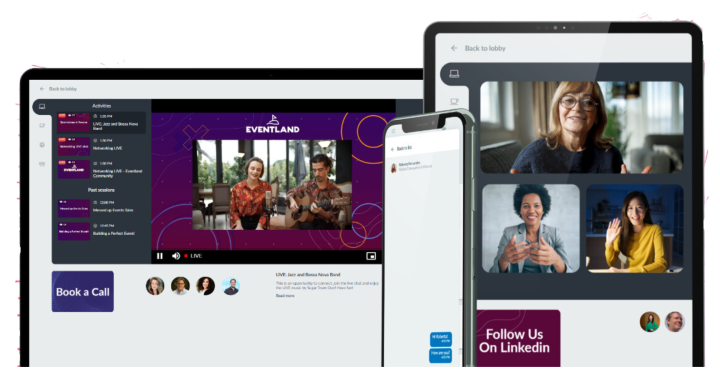
The InEvent integrated platform offers hospitality and housing, travel and logistics, web broadcasting, live engagement, smooth registration, dynamic networking, robust marketing automation, custom websites, and 100+ other features to power interactive and immersive experiences. Its unique AI-powered features include a ChatGPT Integration and Photo Match AI.
⭐ Related: Event Engagement Tools to Keep Attendees Awake
9. Visme
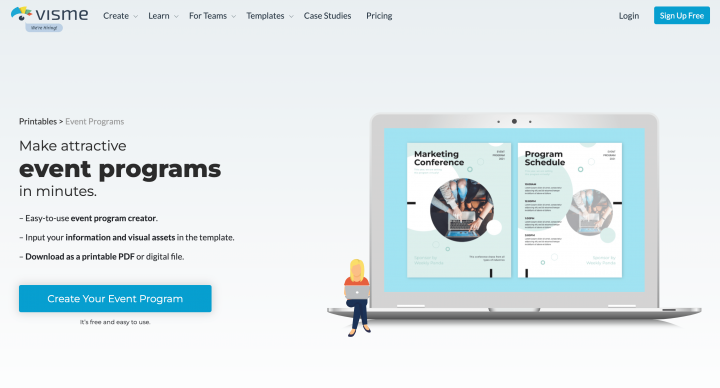
Visme offers a powerful engagement tool, namely an event program maker. You’ll have a complete event program ready to share with attendees with only a few clicks. The importance of giving attendees a clear outline of your event is massive, if not mandatory. This tool allows participants to be aware of all upcoming talks and not miss anything.
10. RainFocus
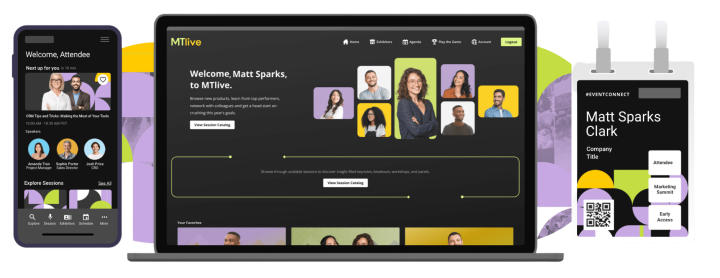
RainFocus is a unified event experience platform that empowers organizations to deliver memorable and insight-driven events seamlessly. It has all the features to cover event marketing, attendee engagement, AI-powered matchmaking, registration, exhibitor activation, reporting, and analytics.
⭐ Related: Top 5 Audience Activation Platforms for Events in 2026
FAQ about event engagement software
What is event engagement software?
Event engagement software is the technology that manages audience interaction at your event. This includes activities such as icebreakers, networking prompts, live polls, social walls, and streaming. It’s the layer that turns a room full of people watching a stage into an audience that actually participates. Most platforms fall into two categories. Some are all-in-one solutions that bundle registration, ticketing, and engagement tools together. Others are focused tools built around one job, like a social wall or a Q&A app. The right pick depends on the size and format of your event, and how deep you need each feature to be. For a hybrid event, look for a platform that treats your in-person and virtual audiences as one group instead of running two separate experiences side by side.
What’s the best event engagement software for a hybrid event?
Start with five practical trade-offs: ease of use for your event team and your attendees, integration with the tools you already use (registration, CRM, marketing automation, AV), data privacy and GDPR compliance for any attendee or content data you collect, moderation controls for anything with live user-generated content like a social wall or Q&A, and analytics you can actually use to prove ROI afterward. For hybrid events, focus on tools that bring together in-person and remote attendees, instead of creating two separate experiences. One easy way to do this is to use a social wall. A social wall is a feature that displays posts from your event hashtag on your event website and on your event’s virtual platform.
Can I combine a social wall with other event engagement tools?
Yes, and it often works better than relying on one tool alone. People often combine a social wall with a digital photo booth. Attendees can create custom photos, which appear on the wall with their posts. This allows speakers and sponsors to see a steady stream of audience reactions, instead of talking to a quiet room. A social wall is also great with live polling tools like Slido. It shows poll results and crowdsourced questions on the same screen as attendee posts. Before combining tools, check that they actually integrate. That way, your event team won’t be stuck managing three separate displays during a live show.
How do I know if the software for managing events was effective?
Use the same metrics you’d use to judge any part of your event to measure success: how many people engaged (posts, poll responses, Q&A submissions), how many people you reached (unique participants, social impressions from hashtag content), how many leads you captured, and how satisfied the attendees were. Most engagement platforms include built-in reporting, but check before you buy whether that reporting breaks down by session, channel, or audience segment, rather than just showing totals. If you compare these numbers to past events or to a previous benchmark, you can turn “people seemed to like it” into a number. You can use this number when it’s time to ask for money for next year’s event.