


The world of higher education and higher education marketing has changed a lot, and 2026 will bring both new challenges and exciting opportunities. Gen Z is leading the way, and schools and other institutions need to meet students’ expectations for authenticity, personalization, and digital engagement.
They are dealing with financial strains, comparing schools around the world, and discussing whether a degree is worth the cost. Colleges and universities that build real connections, use technology well, and create smooth, student-centered experiences on all platforms are successful.
This guide will teach you how to do that. It will assist communication specialists, admissions teams, and higher education marketing professionals in developing plans that boost enrollment and involvement.
Define your goals, audience, and brand identity
Every good higher education marketing plan starts with clarity. Who are you talking to? What makes you different? What are you trying to achieve?
Start by outlining the reputation of your university. Are you a university that prioritizes research and looks for students with a solid academic record? A liberal arts university that prioritizes the personal growth of its students? A community college that prepares students for the workforce? Utilize this positioning to guide your messaging, tone, and imagery on all platforms. In some student-focused discussions about academic support and study strategies, platforms like EssayPro are often mentioned as examples of external resources students may explore while managing demanding coursework.
Demographics are only one aspect of audience segmentation. Make thorough personas for:
- Parents of students who are studying for a traditional undergraduate degree.
- Students from other countries and students who have already finished their bachelor’s degree
- Students who have moved to this university or are learning in adulthood.
- People who used to go to our school or work with our company
Every persona has distinct objectives, deadlines, and preferred modes of communication. For example, Gen Z prefers authenticity to polish. They often discover institutions not just through brochures or websites but also through platforms like Instagram, YouTube, or TikTok. In this landscape, formats such as learning Podcasts fit naturally into their routines, allowing them to engage with educational content while multitasking or scrolling between platforms.
Knowing your audience means understanding their values as well. Today’s students care about:
- Diversity and inclusion
- Mental health support
- Sustainability
- Career readiness
Tailor your higher education marketing content accordingly.
If you understand your audience, you can create interesting content. One good way to share your community’s stories is on a social wall. This makes your community seem genuine and easy to approach.
Case Western Reserve University‘s integrated two-story social wall on campus is a stunning example of this. They create a focal point for interaction that embodies the lively spirit of their community by showcasing posts created in real time by guests, staff, and students.
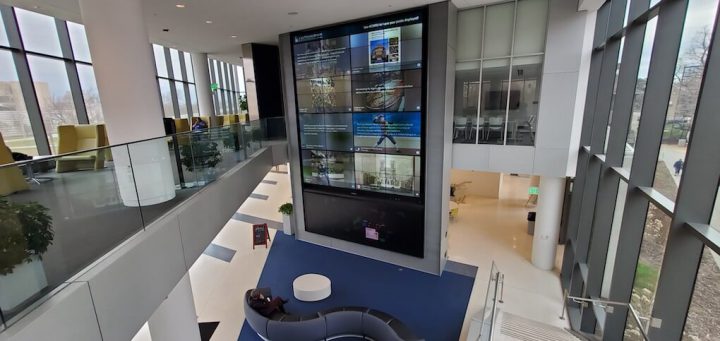
Create a social wall and feature student stories
Build your higher education marketing strategy
Now that your personas and positioning have been established, it’s time to develop a multichannel, data-driven higher education marketing strategy, that advances your objectives throughout the student journey.
Set clear KPIs:
- Website traffic and engagement
- Inquiry and application start rates
- Conversion and yield rates
- Social media engagement
- Attendance at virtual or in-person events
⭐ Related: Social Walls for Universities
Choose your channels strategically:
- PPC and SEO for prospects with high intent
- Email for long-term nurturing
- Social media for interaction and visibility
- Programs for student ambassadors and influencers to promote authenticity
Build a flexible content calendar:
- Align content with key recruitment dates
- Include a mix of storytelling, informational, and promotional pieces
- Feature faculty, student projects, and campus life
Match the content of your map with each part of the sales process.
- Awareness: Social impact, campus culture, and career pathways
- Considerations: Program specifics, faculty biographies, housing, and support services are taken into account.
- Choice: Financial aid information, orientation materials, and virtual tours
Use tools that automatically send messages to people based on their past actions. For example, instead of a generic newsletter, a person who is thinking about becoming a nurse and attends a webinar should receive follow-up content that is specific to their interests.
This multichannel strategy is demonstrated by the University of Florida which uses Walls.io to show carefully chosen campaign content during significant occasions like graduation. Their jumbotron social wall combines carefully chosen posts, branded images, and genuine community engagement in one location.

Create engaging and student-centered content
Students today want to see real stories from real people. In higher education marketing, storytelling remains your most powerful tool, and with the rise of generative AI art platforms, it’s now easier to pair authentic stories with compelling visual content.
Focus on storytelling
- Alumni success stories: Show where graduates wind up, but go beyond the resume to emphasize challenges, development, and change.
- Student life content: Capture both the excitement and the challenges of college. Prospective students want to see the full picture.
- Faculty features: Especially for graduate programs, showcase expertise, mentorship, and research opportunities.
Use authentic video
- Student-led campus tours
- Day-in-the-life vlogs
- Faculty AMA sessions or livestreams
Match content to the platform:
- TikTok: Short, informal, entertaining content
- Instagram: Aesthetic visuals, student takeovers, Reels
- LinkedIn: Career outcomes, employer partnerships, research impact
A social wall can bring this content to life by curating it in real time across your homepage, open day microsites, or digital signage on campus.
Northern Arizona University exemplifies this by using Walls.io to collect and showcase real-time graduation posts. Students, families, and faculty contributed spontaneous photos and messages, turning their social wall into a live celebration of student success.

⭐️ Related: 10 Graduation Ceremony Ideas Using Social Walls
Optimize your website for recruitment
A cornerstone of effective higher education marketing is your website. It must not only inform but engage and convert. For most students, especially international or nontraditional learners, your website might be their only window into your institution before applying.
Make it mobile-first
More than 60% of students who are thinking about enrolling look at the website on their phones. If a website is slow or looks bad on a phone, it can make people leave. Ensure:
- Responsive design
- Fast load times (under 3 seconds)
- Tap-friendly buttons and forms
- Mobile-optimized virtual tours
Guide the user journey
Effective navigation is student-centric, not admin-centric. Organize content based on what potential customers want to know:
- Explore programs
- Visit campus or attend a virtual event
- Understand costs and financial aid
- Apply or request info
Use clear, action-oriented CTAs like “Book a Tour,” “Get Program Info,” or “Start Your Application.”
Feature real stories
Include real stories and testimonials to strengthen the credibility of your higher education marketing efforts. Use real student photos instead of stock images. If you want to show real-time social proof, add Walls.io to program or student life pages.
For example, Queen Mary University London blends celebration and functionality by using their Walls.io wall during graduation ceremonies to share real-time logistics, such as certificate pickup times, in addition to celebrating accomplishments.
Optimize program pages
Program pages should combine:
- Curriculum and learning outcomes
- Faculty introductions
- Career pathways and alumni destinations
- Entry requirements
- FAQs
Use formatting that encourages scanning: headlines, short paragraphs, bullet points, and multimedia embeds. Include program-specific testimonials or student project spotlights.
Enhance conversion with live features
- Live chat to answer quick questions
- Chatbots for 24/7 responses
- Interactive forms that save progress
- Virtual info sessions on demand
The University of Tasmania used their social wall as part of a website redesign. They added Walls.io to their graduation hub so parents and friends could celebrate remotely. This is a great example of combining feelings with practical design.

Start capturing campus life with Walls.io
Promote your programs across channels
Effective higher education marketing means being present across multiple channels. Schools must use multiple methods to spread the word if they want to compete. Maintaining cohesiveness while meeting students where they are is ensured by a carefully thought-out presence across various social media channels.
Paid advertising
- Google Search Ads for program-related queries
- Meta and TikTok Ads for visual storytelling
- LinkedIn Ads for postgraduate and executive education
Use behavioral targeting to reach prospects by interest, geography, or intent. Run A/B tests to optimize headlines, creatives, and landing page experience.
Retargeting strategies
Re-engage visitors who:
- Started but didn’t submit an application
- Watched a virtual tour
- Downloaded a guide
Provide customized content, like deadline reminders, customer reviews, or teacher videos, to help them move closer to making a purchase.
Influencer and student ambassador partnerships
Empower your students to tell their own stories:
- Instagram or TikTok takeovers
- Blog posts or student spotlight articles
- YouTube vlogs or livestream Q&As
Align campaign messaging
Every ad, email, and social post should support the same brand identity. This is where Walls.io is most useful. It pulls content from all your active campaigns and displays it in one consistent way on microsites, event pages, and landing pages.
For Gen Z, being authentic is the most important thing. Higher education marketing should not only inform—it must connect, reflect, and respond to them.
⭐️ Related: How to Set Up a Graduation Photo Booth
Launch UGC campaigns
Tap into moments students are already sharing:
- Move-in day (#Hello[CampusName])
- First exam week (#StudyWithMe)
- Graduation (#ProudToBe[University])
Encourage participation by promoting hashtags and resharing select content. Walls.io automatically pulls and moderates posts from Instagram, TikTok, X, and LinkedIn to create unified displays.
Enable student takeovers
Give students the mic to:
- Showcase their day on campus
- Offer dorm tours
- Highlight classes or projects
It builds authenticity and trust in ways scripted content cannot. Provide basic guidelines, but let their voice shine.
Engage in real-time
Don’t just post, respond. Leave comments on student content, repost with a link to the original, and make sure your posts appear regularly in your audience’s feeds. When students see their university engaging with the public, it strengthens the community.
Leverage digital signage
Social media isn’t just for the internet. With tools like Walls.io, which work with platforms like ScreenCloud or BrightSign, you can bring digital content into physical spaces:
- Put up displays of UGC in places where students and dining hall workers go.
- You can watch updates during orientation or open days.
- Let everyone on campus know about the great things your students are doing.
Champlain College uses digital signage to display Walls.io social walls with content posted during graduation ceremonies in real time.

Measure performance and adjust your strategy
A good higher education marketing strategy doesn’t stop after it’s launched; it keeps getting better over time. It’s important to measure things so you can justify spending money on marketing and improve the ways you get people to enroll and stay engaged.
Track both leading and lagging indicators
Start by defining which metrics matter most:
- Website engagement: Bounce rate, average session duration, and top-performing pages
- Social media: Reach, shares, comments, saves, click-throughs
- Email: Open rates, click-through rates, conversion rates
- Funnel performance: Application starts, submissions, acceptances, and enrollments
Leading indicators like webinar sign-ups and virtual tour participation can help forecast future application trends.
Monitor funnel progression
To find where people are dropping out, we need to map the whole journey. This includes the stages of awareness, inquiry, application, and enrollment. If people aren’t responding to your inquiries, check your follow-up messages. If applications are slow, check the steps that come next or how easy it is to use your portal.
Attribution matters
Deciding what to do with your education takes time. A single student might interact with your brand in 10–20 different ways before applying. Attribution modeling helps you:
- Learn which types of content and platforms are most effective at getting people to sign up or make a purchase.
- Set aside money for the channels that are doing well.
- Explain why it’s important to invest in branding for the long term.
Test and iterate continuously
Run regular A/B tests on:
- Subject lines and email formats
- Ad visuals and headlines
- Landing page copy and CTA design
Involve stakeholders in reviews
Incorporate student ambassadors, academic advisors, and admissions counselors into your quarterly evaluations. Their input frequently highlights issues that aren’t immediately apparent, such as imprecise messaging, omitted frequently asked questions, or underutilized channels.
As higher education marketing expands across digital and physical spaces, cohesion is key. In a time where people are easily distracted, it’s important to create a content experience that everyone can enjoy. People interested in your school might see it on Instagram, TikTok, email, live events, webinars, and web pages. If you don’t have a way to bring all those interactions together, your messages will be all over the place.
Walls.io offers a central solution. By collecting social posts, images, and content created by users and putting them together in one place, you can create a hub where your community can always engage with you.
Why it works:
- Amplifies authentic voices: Showcasing student and alumni content in real-time
- Encourages participation: Attendees at open houses and events are more likely to engage when their posts appear live
- Connects physical and digital: Whether displayed on digital signage or embedded into websites, it bridges the gap between online outreach and real-world experiences
The future of higher education marketing is integrated and student-first
In 2026, the most successful schools will be the ones that find the right balance between technology and human interaction. That means:
- Start by thinking about other people and using stories.
- Providing the same brand experience on different platforms.
- Use data to track, as well as to improve and tailor.
Personalization and authenticity will define the next generation of enrollment success.
On your website, at your events, or throughout your virtual campus, Walls.io assists you in converting authentic content into meaningful engagement, whether you’re advertising your flagship programs or starting fresh student campaigns.
If you combine your marketing efforts with real voices and experiences, you’ll attract students and build a community. This is the future of marketing higher education.