

Every organization tries to build a healthy internal culture to make everyone feel like part of a group. No matter what kind of workplace culture you want to create, there are tools to help you share it. One of them is a culture wall.
A culture wall is a visual display of content created by employees. It can be adapted to any type of setup and placement. Teams within the company use culture walls to create a shared sense of identity. This identity applies to different offices, departments, and time zones.
If your office still has those laminated mission statements from 2019, it’s time to try something new. A culture wall can help.
What is a culture wall, exactly?
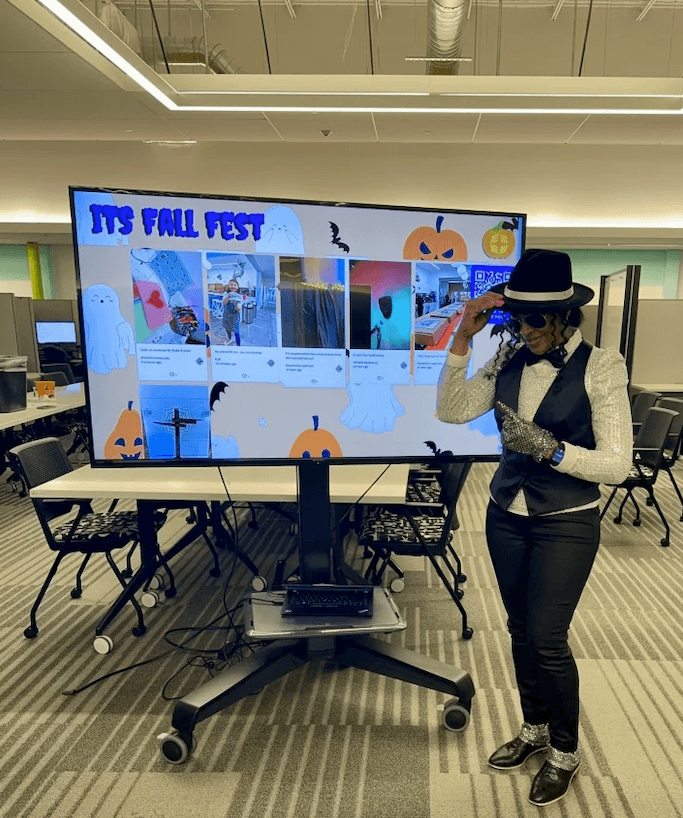
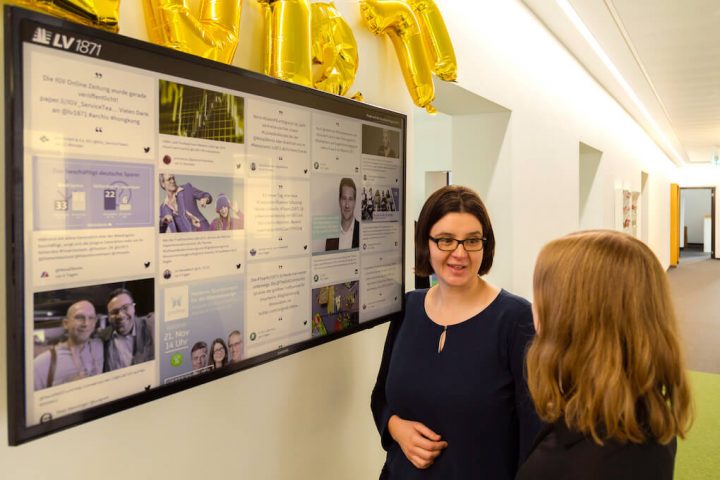
A culture wall is a digital display that shows employee content like team shoutouts, milestone celebrations, photos from company events, and project wins. It can be shown on a TV screen, an intranet embed, or a lobby monitor. The content is always changing and is created by employees instead of being managed by one communications team.
The term is similar to “internal social wall” and “workplace culture display,” but the goal is the same: make culture visible and ongoing instead of something that only appears in onboarding materials and yearly reports.
A culture wall is different from a corporate bulletin board because it updates in real time. When the sales team closes a deal, it appears on the screen. When HR celebrates a work anniversary, it’s on the screen. When employees post from a company event, it will automatically appear on the screen.
Boost team spirit with a social wall at the office.
⭐️ Related: How to Use Social Walls to Power Recruitment Marketing
Why internal communications teams are moving toward culture walls
The main problem that most internal communications professionals face is that culture is hard to see. You can write a values statement, but you can’t make people feel it through a PDF. You can hold a town hall meeting, but 30% of the company is remote or on a different shift. You can send a newsletter, but the number of people who open it is usually low.
A company values display that runs continuously on office screens and the intranet changes the dynamic. Culture becomes something employees can see reflected back in real time, rather than being a top-down broadcast.
Companies like BearingPoint, a global financial advisory firm with teams across 40 countries, have used Walls.io’s internal social wall to run culture and CSR campaigns. These campaigns pull content from employees across offices, gather it in one place, and display it at events and on digital screens at the same time. The wall becomes a mirror, not a megaphone.
This is good for HR and internal communication teams at big companies. It lets remote and frontline employees be a part of the company culture, and it lets leaders share real moments from the culture without making them up.
⭐️ Related: Employer Branding Tips From Industry Experts
What to display on your culture wall
The type of content is important. A culture wall that only shows approved corporate posts quickly starts to look like another content-managed brand channel. The goal is to balance company-driven content and employee-generated content.
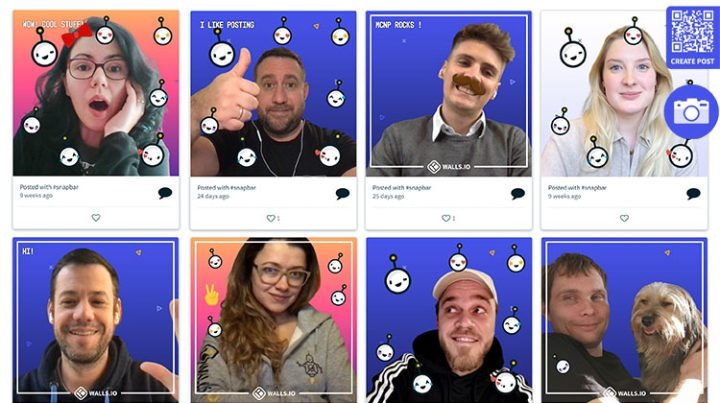
Anchoring content is the stuff that gives the wall its purpose. This content includes company values, call-outs (“Maria just went above and beyond for a customer — that’s our Care value in action”), project milestones, and recognition posts. Managers can contribute to these by using Direct Posts. This feature allows people to post content directly on a social wall. They don’t need to use a social media app to do it. They can scan a QR code or click a link.
Organic content — the things that make the wall feel alive — is what employees contribute themselves. This could be photos from team lunches, posts from LinkedIn or Instagram tagged with a company hashtag, or posts about birthdays and work anniversaries. Connecting Walls.io’s Social Media Aggregation to your company hashtag means this content populates automatically.
We also provide additional content to keep you informed, such as updates about our products, news, and countdowns to upcoming events. These keep the wall looking new during times when there is less activity.
One thing to keep in mind is that not all employees use social media, and some don’t want to. Direct Posts solves this problem. Anyone with a QR code or link can contribute a photo, message, or video. You don’t need a LinkedIn or Instagram account. For global manufacturing companies or healthcare organizations where most staff are frontline workers without social profiles, this is often the only way to include everyone.
⭐️ Related: 30+ Employer Branding Statistics to Boost Your Strategy
It doesn’t take weeks to set up a culture wall. The typical setup involves three things: a connected content source, a moderated feed, and a display.
Content sources: Connect your company’s social accounts and set up a branded hashtag (e.g., #LifeAtYourCompany). Add Direct Posts as an extra source for employees who don’t want to post publicly. You can pull from LinkedIn, Instagram, Slack via Zapier, or any combination that matches where your employees actually communicate.
Moderation: AI Moderation is in charge of the automatic layer. It uses an AI Spam Filter and AI Sentiment Filters to keep your social wall professional and consistent with your brand. For a culture wall, you may also want a communications team member to do a daily review, especially for any content displayed in the lobby or on screens outside the company.
Display: Walls.io works with most intranet platforms and employee apps. If you use a platform like LumApps or Staffbase, the wall can be a part of the tool that employees use every morning. For physical screens, the wall runs in a browser on any screen connected to the internet.
The full setup is explained in our guide to employee engagement ideas for the modern workplace, but most teams are up and running within a day.
Build a social wall in less than 5 minutes.
⭐️ Related: 10 Team Building Activities to Foster Team Spirit
Culture walls for multi-location and global teams
Companies need to have a workplace culture display more and more as they grow. When your company has offices in seven countries and a remote workforce spread across three time zones, it’s not easy to have the kind of shared cultural experience that happens naturally in a company of 50 people.
A culture wall on the intranet is a webpage that always appears and can be seen by all offices and remote employees. An employee in the Munich office and a contractor in Nairobi will see the same content. If a project is won by a team in London, a team in Austin can respond with a Direct Post.
Sandvik Coromant, a global industrial engineering company, used Walls.io to connect employees across 150 countries. The wall connected employees who had never met and provided a continuous visual presence for global campaigns, not just during company events.
For companies in this situation, the culture wall often becomes the glue that formal channels, such as email, town halls, and org charts, cannot provide.
⭐️ Related: Social Walls for Employer Branding
What makes a culture wall different from a digital bulletin board
A digital bulletin board is usually managed by one person or team. It is updated manually and displays static or semi-static content. For example, imagine a rotating PowerPoint presentation on a lobby screen managed by the office coordinator.
In contrast, a culture wall is live, has multiple contributors, and is driven by real content flowing in from connected sources. Nobody needs to update it manually. For example, when an employee posts to LinkedIn with the company hashtag, the post appears on the culture wall. When HR submits a recognition post via Direct Posts, it also appears. The wall manages itself with moderation settings that you configure once.
The practical difference is apparent when you walk past it. A digital bulletin board feels like a regular notice board. A culture wall makes it feel like something’s actually happening here.
⭐️ Related: How to Embed a Social Feed on Your Enterprise Wiki
FAQ
What is a culture wall in the workplace? A culture wall is a digital display that shows employee posts, company achievements, team milestones, and values in action. It works on office screens or intranets and updates automatically from social media and direct employee posts. The goal is to make company culture visible every day, not just during onboarding or annual events.
How do you show company values in the office? The best way to do this is to have a live feed of real employee moments that are tagged to each value. Instead of a static poster, teams create a hashtag for each value (like #OurValueCare) and use it to recognize employees who demonstrate it. Those posts appear on the culture wall automatically, turning values from words into something people can see.
Can employees who don’t have social media accounts still contribute to a culture wall? Yes. Walls.io’s Direct Posts feature lets employees submit photos, videos, and messages by scanning a QR code or clicking a link. This means that employees don’t need a social media account to submit content. This is especially important for organizations with workers in manufacturing or logistics who aren’t on social media.
What’s the difference between a culture wall and standard digital signage? Normal digital signs show content that is made in advance and managed by one person. A culture wall pulls in live content from multiple sources — social media, employee submissions, and recognition tools — and updates itself. The content comes from employees, not a communications coordinator.
Which platforms does a culture wall integrate with? Walls.io works with popular social media apps like LinkedIn, Instagram, Facebook, X, TikTok, and Bluesky. It also works with internal tools like LumApps and Staffbase, and it can connect to thousands of apps using Zapier. For teams working on enterprise projects, there is API access available for custom integrations.
Build your unique culture wall
A culture wall doesn’t require a production budget or a dedicated communications team member to maintain. The content comes from your employees. The moderation is done automatically. The display runs wherever your team already spends time.
If your company’s internal communication strategy relies on newsletters that people just skim and digital signs that nobody looks at, a live culture wall is the best fix.
Start your free Walls.io trial and have your first culture wall live today.