
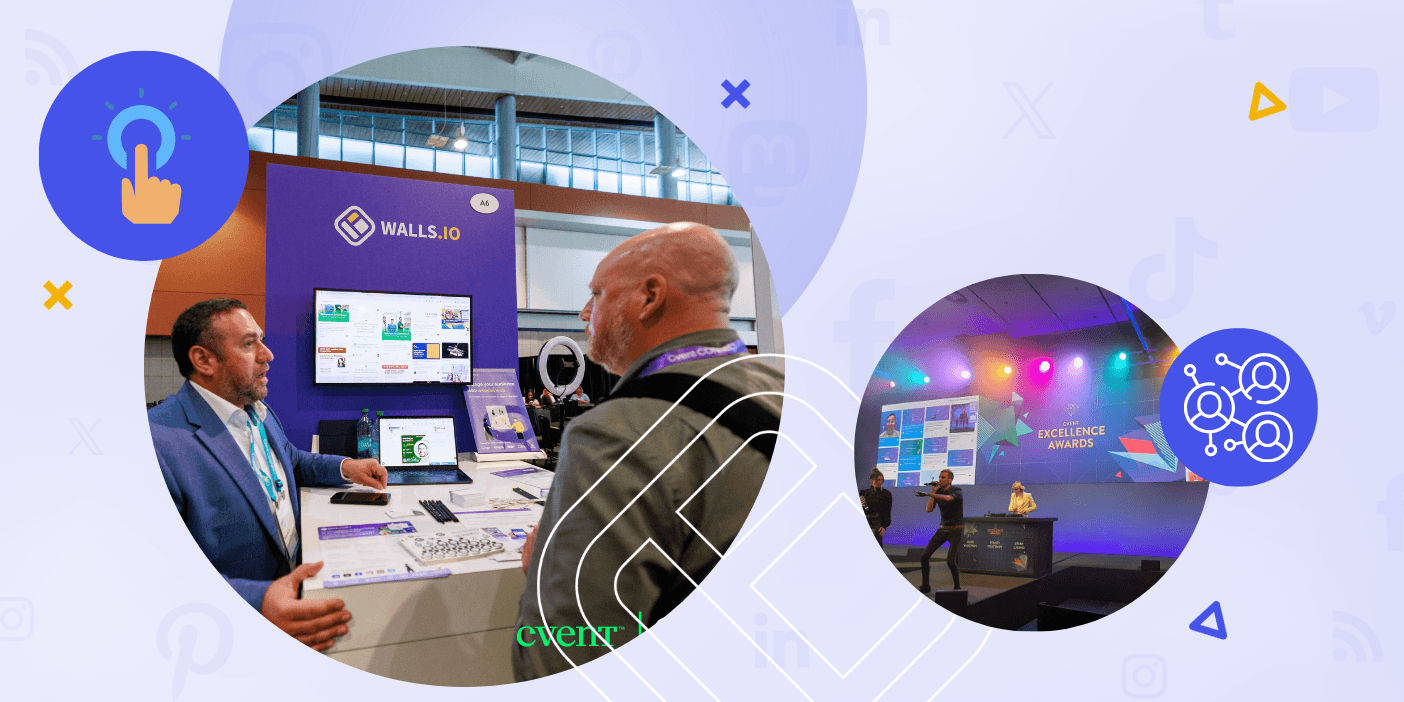

Audience activation platforms are tools that turn people who are just there to watch at an event into people who actively participate, contribute, and promote it. The five best options for your budget in 2026 are Walls.io Social Walls, Walls.io Lens, Walls.io Echo, Cvent, and HubSpot. Each part of the process focuses on a different aspect of the event, from getting people excited before the event to keeping them interested while it’s happening and making sure they stay involved after it’s over.
You know the feeling. Everything is ready, the place is booked, the speakers are confirmed, and then you look at the program and realize that something is missing. The room will fill up, but will it really come alive? Most event teams start using audience activation platforms about two to six weeks before the event. This is when they decide they need more buzz for the event. This guide compares the five platforms we’ve identified, highlighting each one’s strengths and weaknesses. It also provides guidance on selecting the most suitable platform for your needs.
What are audience activation platforms?
Audience activation platforms are software tools that encourage your audience to participate. Instead of sitting through a keynote and leaving, people post, submit photos, answer polls, network, share the event with their own followers, and become leads you can talk to afterward.
This is a broader topic than the term “audience engagement tools” usually covers. Tools that help people stay focused on the present are called engagement tools. Activation is even more powerful. It captures what your audience creates and says, and it gives you something to reuse. Some vendors call this “customer activation software,” which is software that helps customers sign up for and learn how to use a product. For events, the center of gravity is different. You’re getting a crowd going in a room, on a livestream, and on their social feeds, often all at once.
The best platforms in this category do three things well. They make participation easy enough that people actually take part. They give you control over what goes public, because one bad post on a big screen is a real problem, not a minor one. And they measure what happened, so you can prove the spend was worth it. To go deeper on the tactics behind this, our guide to event engagement tools covers the on-the-ground playbook.
How did we choose these audience activation platforms?
These five aren’t ranked against each other because they don’t all do the same job. A social wall and a CRM are not competitors. Think of it as a stack: some of these run before the event, some during, and some after. The right answer for you is usually two or three of them, not one. If you want a framework for measuring the results across all of them, start with the event KPIs worth tracking.
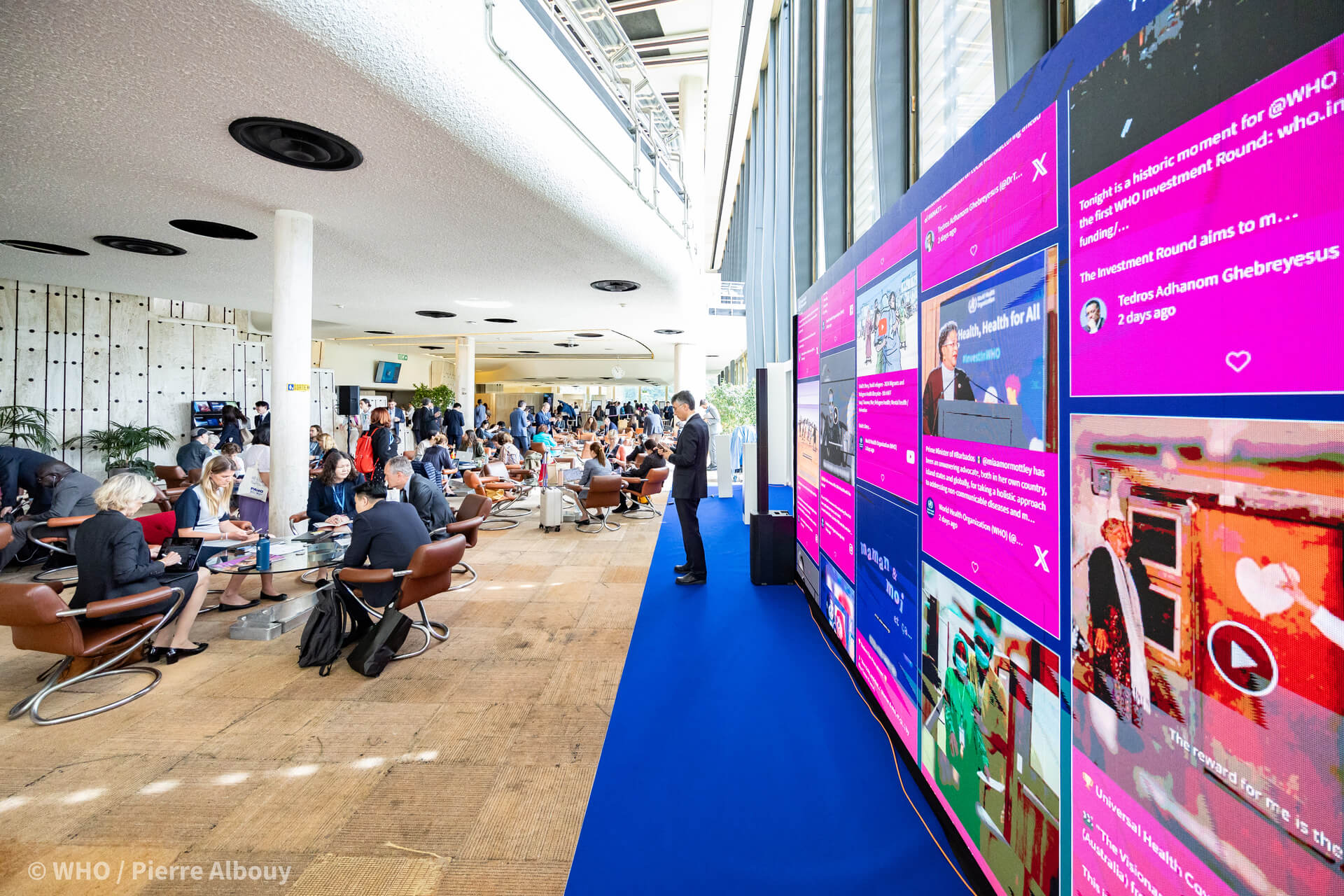
If activation has a centerpiece, this is it. A social wall collects posts from your audience and your channels and displays them live on screens, websites, and intranets. When people see their post appear on the big screen behind the stage, they post again, and so does the person next to them. That loop is the most important part.
Walls.io runs on social media aggregation, which collects content from social media and displays it anywhere, pulling from 14 channels including Instagram, LinkedIn, TikTok, and X. It also supports Direct Posts, which lets people post content directly on a social wall without having to use social media through the scan of a QR code or via a link. That last part matters more than it sounds: at corporate and internal events, a large share of your audience won’t post from personal accounts, and Direct Posts is how you include them anyway.
Brand safety is where Walls.io separates itself from cheaper options. AI Moderation uses an AI Spam Filter and AI Sentiment Filters to keep your social wall professional and on-brand, and you can still manually review, pin the best posts to the top, and add clickable calls to action. On the compliance side, Walls.io is the most secure social wall, supporting 2FA and complying with EU & US/Californian data protection laws (GDPR and CCPA). It’s EU-hosted, and it runs without third-party trackers. That combination is what gets it through enterprise security reviews at companies like FIFA, Ford, and Microsoft. If you’re new to the format, here’s how a social media wall works from the ground up.
Best for teams that want a live, moderated content hub they can put on a screen, a website, and an intranet at the same time.
2. Walls.io Lens
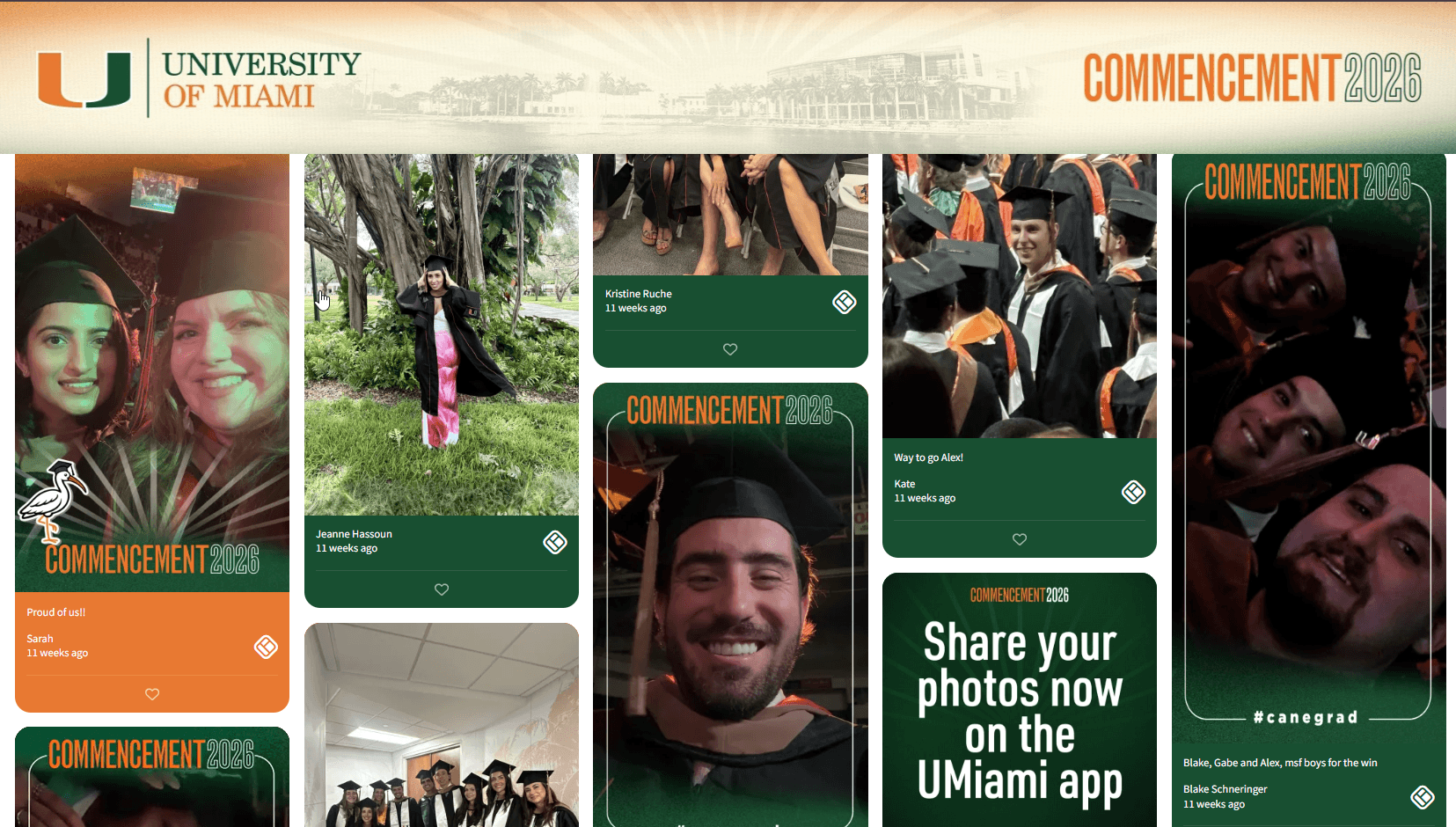
Lens is a digital photo booth, and it exists because photos get people off the sidelines faster than almost anything else. Attendees scan a QR code, no app required, snap a photo or GIF, add a caption, drop on a branded frame or sticker, and their post lands on the social wall a moment later.
The branding controls make it more than just a novelty. You can upload frames, stickers, and backgrounds that match the event. You can also offer sponsored frames as part of a sponsorship package. This makes the “logo on a banner” into something a sponsor’s logo actually appears on across hundreds of attendee photos. Lens also handles Lead Generation, collecting leads and user-generated content in one go: you define the fields each person fills in before submitting, and every submission becomes a lead you can export to your CRM. So one photo does three jobs at once. It fills the screen, it hands the sponsor real exposure, and it captures a contact.
Lens uses the same backend as the social wall, so the same AI and manual moderation applies. This means that nothing reaches the screen without your approval. It’s great for photo-driven activations, sponsor-funded activations, and any event that wants authentic attendee content plus lead capture from a single QR scan.
3. Walls.io Echo
Everything above happens during the event. Echo is the one that works before it. Walls.io Echo is a pre-event marketing tool that turns your attendees, speakers, sponsors, and employees into a promotion channel. Each person gets a share page with a branded social sharing card and a unique tracking link, so you can trace every share, click, and conversion back to a specific campaign and a specific person.
The friction is almost nonexistent. When someone clicks your link and logs in, their name and photo automatically fill in a LinkedIn card that they can then post to X, Facebook, Instagram, WhatsApp, Telegram, SMS, or email. This can be done in under 30 seconds. No design skills, no chasing speakers for posts. You can even create the card design using AI from a few event details.
What will convince a marketing lead to buy Echo is the ability to measure it. It tracks revenue and conversions using UTM parameters and a built-in dashboard, ranks your top sharers on a leadership list, and maps how a campaign spreads person to person through a Viral Spread Tree. The numbers are valid: Event Options recorded a 10.7x viral boost on their attendee campaign, and WorldatWork saw roughly one in five people who hit the share page actually post it. Echo follows GDPR and CCPA rules, works on its own or with a social wall, and costs much less than similar tools.
This is the best way to get people to share your event with their friends and family without having to buy more ads.
4. Cvent
Cvent is the most comprehensive event management platform on this list. It manages the most important parts of an event: registration and custom event websites, agenda and session management, onsite check-in with badge printing and barcode scanning, event marketing with email sent to specific people, and its Attendee Hub, a web and mobile app that carries the agenda, networking, appointments, and sponsor and exhibitor content before, during, and after the event. In 2026, the Attendee Hub app will use Cvent’s CventIQ AI to suggest connections and networking opportunities for attendees, and the platform’s reports will show how engaged attendees are in relation to the event’s return on investment (ROI).
It’s designed for larger, more complex programs, like enterprise conferences, trade shows, and teams that run many events a year where registration, logistics, and reporting all need to be in one system. That’s why it’s listed with Walls.io, not against it. Walls.io works with Cvent, and the two connect: Cvent handles registration, the app, and the operational data, while Walls.io adds the live social wall and UGC layer that turns a Cvent agenda into a room that feels alive on screen.
It’s best for business event teams that need registration, an attendee app, onsite logistics, and analytics all in one place.
5. HubSpot
The event ends; the work doesn’t. HubSpot is the marketing automation platform in the stack, sitting inside a CRM so every lead you captured, from an Echo share to a Lens submission to a Cvent scan, lands somewhere you can act on it.
Its Marketing Hub handles email campaigns, landing pages, social scheduling, ad management, and lead nurturing from one place. In 2026 the nurture logic leans on behavioral triggers rather than fixed delays, so a lead who visits your pricing page twice and downloads a guide gets a different follow-up than one who went quiet. It’s also where post-event user onboarding sequences live, guiding new signups through their first steps automatically instead of manually. Worth knowing before you buy: the real automation workflows sit in HubSpot’s Professional tier, listed around $890/month in 2026, so it’s an investment that pays off when you’re running nurture at volume, not for a one-off event.
HubSpot doesn’t activate the room. It activates the pipeline after, which is the part most event teams leave on the table.
Best for teams that want pre-event nurture, post-event follow-up, and clean attribution tying event leads to revenue.
How do these audience activation platforms work together?
Think about one event across all five. Echo makes you excited for the weeks before, filling your social wall with content so that day one already feels special. During the event, the Walls.io Social Wall appears on screens and the website, and Lens turns every phone into a photo booth that also captures leads. Cvent manages registration and the app that attendees use to stay informed. After that, HubSpot follows up with every lead and continues to nurture them.
The connective tissue is audience analytics. Echo attributes shares to revenue, the social wall and Lens report engagement and content volume, Cvent measures registration and in-app activity, and HubSpot ties it all to pipeline. Read those numbers together and you can finally answer the question leadership always asks, which is whether the activation was worth the spend. Our social wall ROI playbook walks through how to frame that answer. For inspiration on what strong activation looks like in practice, these audience engagement examples from real events are a good starting point.
Frequently asked questions
What’s the difference between audience engagement tools and audience activation platforms?
Tools that keep people interested during a presentation, such as live polls or a Q&A widget, are called audience engagement tools. Audience activation platforms do even more. They get your audience creating content, capturing leads, and promoting your event to their own networks. Then, they measure the results. When you activate something, it makes assets and data that you can keep and reuse. Engagement usually ends when the session does.
Do I need all five of these platforms?
No, most teams run two or three. A common starting stack is a social wall for the on-screen moment plus Echo for pre-event promotion, since both come from Walls.io and connect directly. Use Lens when you’re taking photos or capturing leads, Cvent when you need to manage an event, and HubSpot when you want to nurture leads after the event. Start with the job that’s most broken and work on it.
Which audience activation platform is best for a smaller event or a tight budget?
Start with social walls, which deliver the most visible change for the least setup, and pair them with Echo, which is priced well below comparable amplification tools and needs no ad budget to work. Both go live the same day. You can layer on Lens, an event app, or a marketing automation platform once you’ve proven the value internally.
How do I measure audience activation?
Track four things: participation (posts, photos, poll responses, shares), reach (impressions and viral spread), leads captured, and pipeline influenced. Echo attributes shares and revenue, the social wall reports engagement volume, and a CRM like HubSpot ties leads to deals. Reporting all four together, not just one, is what turns audience analytics into a case for next year’s budget.
Are these platforms GDPR compliant?
Walls.io Social Walls, Lens, and Echo are GDPR and CCPA compliant, EU-hosted, and run without third-party trackers, with a data processing agreement available, which is what clears enterprise procurement. Cvent and HubSpot are both established enterprise vendors with their own compliance programs; if you operate in the EU, confirm data residency and DPA terms with each during your security review.
Which audience activation platform is right for your event?
If your event feels flat on screen and in the room, start with a social wall and add Lens for photo-driven participation. If you’re worried about registrations, start with Echo and let your audience share it with others. When you’re getting many leads after every event, HubSpot can help. If you need registration, an attendee app, and onsite logistics in one system, Cvent is the clear choice.
The best way to see if Walls.io is right for your next event is to try it out. Try Walls.io for free. You don’t need a credit card. Or, schedule a demo of Echo. We’ll create a live campaign using real numbers from your event.